


 Free Newsletter


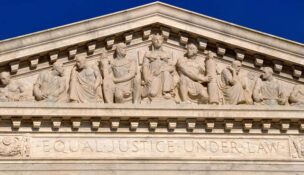
The U.S. Supreme Court building (REUTERS/Jonathan Ernst)
SCOTUS bars state affidavit rule in federal med-mal cases
Staff Report//January 23, 2026//


A plaintiff suing for medical malpractice in federal court need not comply with a state law requiring an expert’s affidavit of merit in order to proceed with such claims, the U.S. Supreme Court has ruled.
The plaintiff in the case, Harold Berk, suffered a fractured ankle while on a trip to Delaware. Citing diversity jurisdiction, he subsequently sued a Delaware doctor and hospital in federal court, alleging his ankle failed to heal properly because of their negligence.
Under Delaware Code Title 18, §6853, a plaintiff may not sue for medical malpractice unless the complaint is accompanied by an affidavit of merit signed by a medical professional stating there are reasonable grounds to believe that a defendant was negligent. Upon a showing of good cause, a plaintiff may be granted a 60-day extension of time to file the affidavit by requesting an extension before or at the time he files the complaint. Clerks of court of court are required to refuse to file a complaint in the absence of an affidavit or a timely motion for an extension.
A federal judge dismissed the case after the plaintiff failed to find a doctor to provide an affidavit within the statutory time frames.
The 3rd U.S. Circuit Court affirmed, rejecting the plaintiff’s contention that §6853 does not apply in federal court because the Federal Rules of Civil Procedure displaced the state law.
A unanimous Supreme Court reversed the courts below, with a majority concluding the state law was displaced because Fed. Rule Civ. Proc. 8(a)(2) simply requires that a complaint include “a short and plain statement of the claim” showing entitlement to relief.
Click here to read the full text of the U.S. Supreme Court’s Jan. 20 decision in Berk v. Choy.
- “Because Rule 8 and §6853 answer the same question, Rule 8 governs so long as it is valid under the Rules Enabling Act, which requires that Federal Rules be procedural rather than substantive. The line between substance and procedure is hazy, and we draw it differently in different contexts. For purposes of the Rules Enabling Act, we use a modest test: whether the Federal Rule ‘really regulates procedure.’ Or put differently, ‘[w]hat matters is what the Rule itself regulates: If it governs only “the manner and the means” by which the litigants’ rights are “enforced,” it is valid.’
“In applying this analysis, we have ‘rejected every statutory challenge to a Federal Rule that has come before us.’ We have upheld Rules governing the certification of class actions; service of process; compelled mental and physical examinations; sanctions for frivolous appeals; and sanctions for signing court papers without reasonably investigating the facts asserted.
“Like those Rules, Rule 8 ‘really regulates procedure.’ It determines what plaintiffs must present to the court about their claims at the outset of litigation. Although the Rule may have some ‘practical effect on the parties’ rights,’ it regulates ‘only the process for enforcing those rights,’ not ‘the rights themselves, the available remedies, or the rules of decision.’ …
“To determine whether a Rule is valid under the Rules Enabling Act, the only question is whether it ‘really regulates procedure.’ Rule 8 does, so it governs, and Delaware’s affidavit law does not apply in federal court.”
— Justice Amy Coney Barrett, opinion of the court
- “I agree with the Court that Delaware’s affidavit requirement cannot apply in federal court. I write separately because, in my view, the relevant conflicts are with Federal Rules of Civil Procedure 3 and 12, not Rule 8.”
— Justice Ketanji Brown Jackson, concurring
Related Articles
Related Content



Latest Opinion Digests
- Criminal Law-Post-Conviction Relief-Ineffective Assistance of Counsel
- Criminal Law-Murder-Admission of Post-Arrest Silence and Jail Phone Calls
- Criminal Law-Involuntary Manslaughter-Sufficiency of Evidence
- Criminal Law-Child Molestation-Improper Credibility Vouching
- Criminal Law-Post-Conviction Relief-Abandonment Inquiry
- Real Property-Inverse Condemnation-Legal Authority for Award
- Real Property-Foreclosure-Deficient Appellate Brief
- Negligence-Fatal Traffic Accident-Official Immunity
- Domestic Relations-Order of Protection-Family or Household Member
- Criminal Law-Burglary-Sufficiency of Evidence
- Negligence-Personal Injury-Non-Party Subpoena-Financial and Tax Records





Top stories
- Death row inmate gets relief from ‘Batson’ waiver finding
- Jury sides with Columbia grocery store in slip-and-fall lawsuit
- Chief Disciplinary Counsel asks state’s top court to disbar attorney
- Illinois jury awards $38.4M after medical equipment fails, injures surgical technologist
- Missouri Supreme Court rules governor had authority to call redistricting session
- Calverton Park reaches settlement over unconstitutional vehicle towing practices
- Defense secures verdict in bicyclist injury case using plaintiff’s social media
- Missouri voters to decide 4 constitutional amendments in August
