


 Free Newsletter

High court seems ready to back SEC in fight over ‘disgorgement’ power
By John Kruzel and Andrew Chung, Reuters//April 20, 2026//

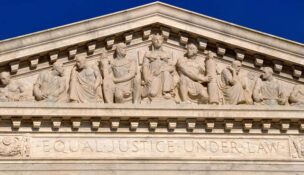
A view of the U.S. Supreme Court in Washington, U.S., July 1, 2024. (REUTERS/Kevin Mohatt/File Photo)
High court seems ready to back SEC in fight over ‘disgorgement’ power
By John Kruzel and Andrew Chung, Reuters//April 20, 2026//


Summary
- Supreme Court appears inclined to uphold SEC’s broad disgorgement authority
- Central issue: whether investor harm must be proven to recover profits
- Case stems from $3M disgorgement order in securities fraud scheme
- Ruling could clarify limits of SEC enforcement powers nationwide
The U.S. Supreme Court seemed inclined on Monday to back the Securities and Exchange Commission in a case testing the bounds of one of the Wall Street watchdog agency’s key powers, a financial remedy called disgorgement in which it seeks recovery of profits made from illegal activities.
During arguments in a case involving a defendant named Ongkaruck Sripetch, a majority of the court’s nine justices appeared receptive to a defense mounted by Republican President Donald Trump’s administration of the SEC’s broad disgorgement power.
Liberal and conservative justices alike posed sharp questions to a lawyer for a defendant named Ongkaruck Sripetch, who challenged the SEC’s disgorgement authority. At the agency’s request, a court in California ordered Sripetch to repay more than $3 million in ill-gotten gains and interest related to a financial fraud case.
The SEC’s general power to pursue disgorgement is not in dispute in the case. Courts have long recognized this authority, and Congress enshrined it in federal law. At issue is whether the agency must show that victims suffered economic harm before it can seek the surrender of illegal profits.
Some of the justices pushed back on the argument by Sripetch’s lawyer, Daniel Geyser, that the disgorgement in this case would amount to impermissible punishment by the SEC because it had failed to prove that victims had experienced economic harm.
“Why does that look like a penalty if all you’re taking away is the ill-gotten gains, so they’re the proceeds that the wrongdoer isn’t entitled to in the first place?” conservative Justice Amy Coney Barrett asked Geyser.
“I could see a fine or punishment if the defendant is actually paying out of his pocket some money that was rightfully his – that’s a punishment,” liberal Justice Ketanji Brown Jackson said. “But if we’re just disgorging his ill-gotten gains, I guess I’m not sure I understand why that’s a punishment.”
‘Why bother?’
Geyser told the justices that if the purpose of the disgorgement goes beyond restoring funds to a wronged party or if it even provides a windfall to some, then it crosses the line into a penalty.
“So basically what you’re saying is the government has to call every victim, prove every dollar of loss. Why bother? Why bother asking for disgorgement if they have to prove loss to that amount?” liberal Justice Sonia Sotomayor told Geyser.
Under Trump, the SEC used the remedy to obtain around $1.4 billion in fiscal 2025, according to an agency tally that excluded certain sums. The prior year under Democratic President Joe Biden, the SEC obtained $6.1 billion through disgorgement, almost three-fourths of its total financial penalties.
The SEC in 2020 sought disgorgement for illicit proceeds that it said Sripetch reaped through fraudulent means, including a pump-and-dump scheme that involved artificially inflating the price of penny stocks before selling off his shares at a profit.
Sripetch admitted violating securities law, and in a related criminal case was sentenced to 21 months in prison. He is challenging the lower court’s disgorgement order on the grounds that the SEC failed to prove his actions caused stock prices to drop or otherwise financially harmed investors.
Malcolm Stewart, a Justice Department lawyer, argued that the SEC is not required to show that fraud victims had experienced financial, or “pecuniary,” harm before the agency could pursue repayment from the perpetrator of the fraud.
“Disgorgement is intended to ensure that the defendant does not profit by its own wrong,” Stewart told the court.
Some of the justices expressed concerns to Stewart about how disgorgement has been applied, including whether it has intruded on a defendant’s constitutional right to a jury trial, though the court seemed inclined to limit its decision to the narrow question before it and save other issues for another day.
A California-based federal judge sided with the SEC’s broader interpretation of its disgorgement power in a ruling that was upheld last year by the San Francisco-based 9th U.S. Circuit Court of Appeals.
The SEC’s $1.4 billion disgorgement figure for fiscal 2025 excludes certain repayments secured by other federal agencies and an $8 billion payment made in January 2025, during the second week of Trump’s return to the White House, stemming from long-running SEC litigation concerning a Ponzi scheme. Beyond disgorgement, the SEC can also pursue fines, sanctions and other punishment.
The Supreme Court is expected to rule by the end of June.
Related Articles
Related Content




Latest Opinion Digests
- Domestic Relations-Order of Protection-Stalking
- Domestic Relations-Child Custody and Support-Motion for Modification
- Unemployment Compensation-Denial of Benefits-Termination for Misconduct
- Municipal-Government Records-Public Interest in Disclosure
- Criminal Law-Forgery-Evidentiary Rulings
- Criminal Law-Drug Possession-Competency Evaluation
- Real Property-Quiet Title-Default Judgment
- Criminal Law-Municipal Ordinance Violation-Writ of Prohibition
- Torts-Victims’ Compensation Fund-Sovereign Immunity
- Criminal Law-Statutory Rape-Sufficiency of Evidence
- Constitutional Law-Extraordinary Legislative Session-Gubernatorial Authority





Top stories
- SCOTUS News: Court nixes private enforcement action under ICA
- SCOTUS News: Ex-Twitter employee gets conviction tossed for venue error
- 8th Circuit affirms SSA denial of disability benefits
- ICON Honors 2026 profiles
- Court orders rewrite of Missouri tax amendment ballot text
- In the Lead: Up & Coming Law Firms 2026
- SCOTUS News: Justices revive PI claim omitted from plaintiff’s bankruptcy
- Missouri appeals court revives father’s custody case
