


 Free Newsletter

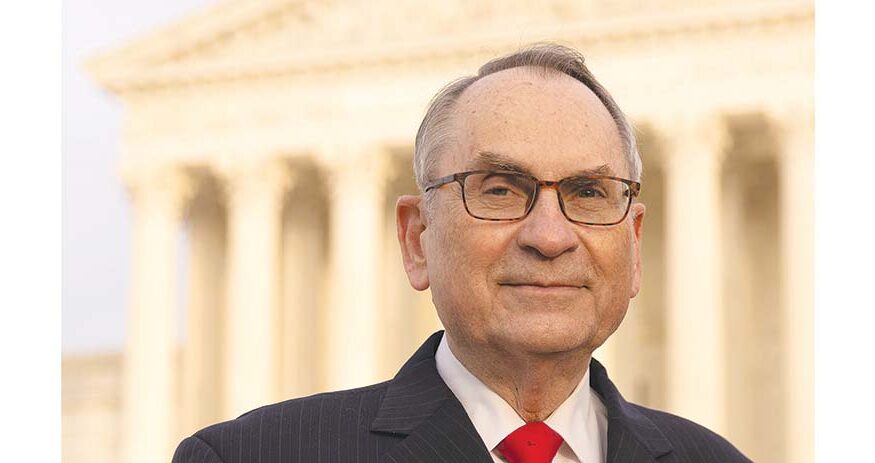
Michael Whitehead
Legal Limelight: Michael K. Whitehead
Erin Achenbach//May 15, 2026//


Summary
- Michael Whitehead reflects on decades-long legal career.
- Worked on multiple U.S. Supreme Court First Amendment cases.
- Involved in Trinity Lutheran and Chiles decisions.
- Balances small firm practice with high-profile litigation.
Michael K. Whitehead has spent more than four decades building a legal career that includes both small-firm practice and high-profile litigation. Based in Kansas City, Whitehead oversees a general civil practice handlings matters ranging from wills and probate to personal injury while also working on First Amendment and religious liberty cases that have reached the U.S. Supreme Court. These cases are often in collaboration with Alliance Defending Freedom, a Christian conservative nonprofit legal group where he serves as an allied attorney and board member.
A University of Missouri graduate, Whitehead earned both his undergraduate and law degrees from Mizzou before serving in the U.S. Army JAG Corps. He later entered private practice, where an early case, Widmar v. Vincent, helped shape the trajectory of his work in constitutional law. His career has also included work with the Southern Baptist Convention’s public policy and legal efforts in Washington, D.C., focusing on religious liberty issues.
Among the Missouri cases he has worked on is Trinity Lutheran Church of Columbia v. Comer, a 2017 decision in which the U.S. Supreme Court held that a state could not exclude a church from a generally available public benefit program based on its religious status. Whitehead was involved in the case alongside his son, Jonathan, describing the experience as one of the most meaningful moments of his career.
Most recently, Whitehead was involved in the U.S. Supreme Court’s decision in Chiles v. Salazar, a March 2026 ruling that struck down a Colorado law restricting certain counseling conversations with minors, with the Court finding the measure imposed an unconstitutional, viewpoint-based restriction on speech in an 8-1 decision. Judge Ketanji Brown Jackson dissented.
RELATED: Legal Limelight features
Tell me about yourself and your legal background
I was born in 1950 in Independence … grew up in Harry Truman’s hometown, and went to Truman High School … went to Mizzou and did an undergraduate in political science, prelaw, and then went to the law school in Mizzou, ’72 to ’75 … I owed Uncle Sam three years, which I did in the JAG Corps (Judge Advocate General’s Corps) … and while I was in the JAG Corps, I met another JAG captain … his name is Jim Smart … and he and I started together in a two-man shop in 1978.
How did you first become involved in U.S. Supreme Court litigation?
From the first day I was in law practice in 1978 … we were working on First Amendment cases … and that case (Widmar v. Vincent) worked its way to the U.S. Supreme Court … we argued the case … and we won that case.
How did you get involved in the Chiles case?
We knew about a case in Washington state called Tingley v. Ferguson … and there obviously was a pattern and a push by groups around the country that wanted to restrict conversion therapy … and then we heard about the other ADF case in Colorado that was working its way up … and when the Supreme Court granted cert in the Chiles case, we were involved in the briefing, coordinating the amicus briefs with the Chiles appeal. One of the ADF lawyers actually did the oral argument in the case, but as a board member on ADF, I go to most of the cases that we have before the U.S. Supreme Court.
What stands out about preparing a case for the U.S. Supreme Court?
Probably the major difference … is the number of briefs that are filed … in this case, there were more than a dozen … maybe 35 to 40 total … you’ve got to respond to all of these amicus briefs … and be prepared for one of the justices to ask some question from footnote 33 on the ACLU’s brief.
How did it feel when the Court issued its decision?
It was a pleasant surprise … we were just thrilled to see an 8-1 decision. You don’t get many of those.
What impact could the Supreme Court’s Chiles decision have on your Missouri case challenging Kansas City–area counseling ordinances (Bury, et al. v. Jackson County, et. Al)?
The Chiles case was a state statute on licensing and regulation of licensed professional counselors … we think … this decision by the court was so clear and so broad … that it will nullify all of those state statutes … but … there are just a few slightly different factual issues … that will require the court to go ahead and hear some of the facts in the argument.
What has it been like to maintain a small practice while working on major cases?
My practice is a very general civil practice … but getting to practice as a kind of solo or small firm practitioner … has given me the freedom to pick the kinds of cases that I want to work on … so I still get to be the small practitioner but can work on major cases with top lawyers from around the country.
What do you enjoy outside of your legal work?
My wife and I just celebrated our 50th wedding anniversary (in April) … we have three children and 11 grandkids … our greatest joys are our family and spending time with the grandkids as often as we can.
Related Articles
Related Content


Latest Opinion Digests
- Criminal Law-Post-Conviction Relief-Ineffective Assistance of Counsel
- Criminal Law-Murder-Admission of Post-Arrest Silence and Jail Phone Calls
- Criminal Law-Involuntary Manslaughter-Sufficiency of Evidence
- Criminal Law-Child Molestation-Improper Credibility Vouching
- Criminal Law-Post-Conviction Relief-Abandonment Inquiry
- Real Property-Inverse Condemnation-Legal Authority for Award
- Real Property-Foreclosure-Deficient Appellate Brief
- Negligence-Fatal Traffic Accident-Official Immunity
- Domestic Relations-Order of Protection-Family or Household Member
- Criminal Law-Burglary-Sufficiency of Evidence
- Negligence-Personal Injury-Non-Party Subpoena-Financial and Tax Records





Top stories
- Court denies immunity for St. Louis city officials in First Amendment dispute
- Legal Limelight: Michael K. Whitehead
- Cannabis verdict puts focus on workplace safety
- The POWER List: Business Defense 2026
- Missouri Supreme Court upholds 2025 congressional redistricting map
- Missouri Supreme Court weighs if new Congressional map must be suspended pending referendum
- 2026 Reader Rankings winners
- Missouri attorneys navigate increase in challenging UTV & ATV crashes
