


 Free Newsletter

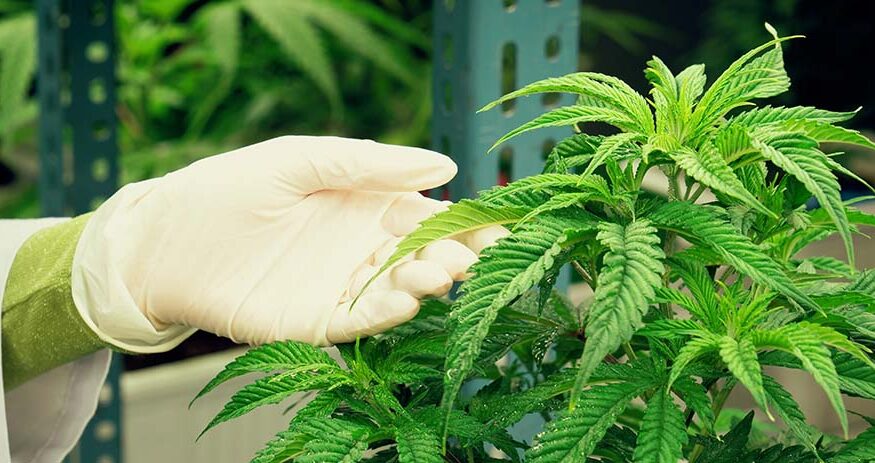
Depositphotos.com image
Cannabis verdict puts focus on workplace safety
Erin Achenbach//May 14, 2026//


Summary
- A St. Louis jury awarded $2.55 million to Mark and Lisa Avent over alleged marijuana dust exposure at a cannabis grow facility.
- The case centered on respiratory and cardiac injuries allegedly tied to airborne cannabis dust released where Avent was working.
- Attorneys say cannabis businesses should assess hazards, document safety efforts and train employees on written protocols.
- OSHA‘s general duty clause applies to cannabis employers, even though marijuana remains illegal under federal law.
When a St. Louis jury awarded $2.55 million last year to a contractor and his wife over alleged marijuana dust exposure at a cannabis grow facility, the verdict put a spotlight on a workplace safety issue drawing growing attention in more mature cannabis markets.
The case, filed in St. Louis City Circuit Court, centered on allegations that Mark Avent suffered pulmonary distress and an NSTEM heart attack after marijuana dust was released into the lab air space where he was working as an independent contractor. Avent later required future medical care for atrial fibrillation and developed PTSD after the incident, according to case information submitted after the verdict. The jury found Blue Arrow Missouri 85 percent at fault and Avent 15 percent at fault, awarding $2.5 million to Avent and $500,000 to his wife, Lisa Avent.
The verdict arrived as agencies have begun to track occupational hazards more closely in cannabis cultivation and processing, particularly respiratory hazards associated with dust, mold, pollen, terpenes and other airborne exposures.
St. Louis attorney William Meehan, who represented Avent and his wife, said he is not aware of another Missouri verdict or injury case involving similar allegations. But he said the Avent case should still get the attention of cannabis facility operators because the accident, in his view, was preventable.
“This was a totally avoidable accident,” Meehan said. “This was an accident that was caused by just gross negligence by the employee, just not knowing what he was doing, compounded by the fact that the facility didn’t have the proper safeguards in place. My client’s injury could have been prevented had there been a seal on the room, which they’re supposed to have, and it’s for that reason, to protect people from inhaling the dust in case of an accident.”

Amy Rubenstein, a Dentons attorney who advises cannabis businesses, said she hasn’t seen clear evidence that workplace injuries are increasing in the cannabis industry, but as the industry has scaled, she said, the nature of the workplace has changed.
“I don’t know that injuries are increasing when you think about how the industry has grown and the exponential number of new employees in this industry,” Rubenstein said. “I think that some could argue that, as a relative basis, injuries have actually gone down.”
Still, she said, cannabis businesses often combine several different workplace environments under one umbrella.
“We’re dealing with an industry that has agriculture manufacturing and retail, all under one corporate umbrella,” said Rubenstein. “And that’s not a usual corporate structure that is that vertical … Early on, there were just fewer employees and now as the industry has scaled, the hazard profile has changed with it to be more of like an industrial hazard profile.”
Potential hazards identified by the National Institute for Occupational Safety and Health include chemical exposures, biological exposures, ergonomic and physical hazards, safety hazards and impacts on worker mental health and well-being. Chemical exposures may include carbon dioxide, ozone, pesticides and volatile organic compounds, while biological exposures may include allergenic proteins, endotoxins, microbials and organic particulate matter.
Respiratory issues, however, are central to many higher-profile cases and public health reports in the industry. A 2025 study published in the Journal of Occupational and Environmental Medicine looked at work-related asthma cases in California, Massachusetts, Michigan and Washington. Researchers identified 30 cases from each state’s cannabis legalization date through 2023. Those cases included new-onset asthma and work-aggravated asthma. The most frequently reported exposure was plant material, primarily cannabis dust or marijuana plant material, and most cases involved workers in indoor cultivation or processing.
The issue gained national attention after a Massachusetts cannabis production worker died in 2022 following progressively worsening work-associated respiratory symptoms. That resulted in a $3 million wrongful death lawsuit. Another fatality also occurred two years prior in California. That worker developed new-onset asthma after working around dried cannabis before later collapsing at work.
Meehan said respiratory cases can be difficult because workers may have other potential contributing factors, including smoking history or other respiratory problems. But he said the long-term impact of daily cannabis exposure in the workplace remains an open question as Missouri’s industry develops.
“Respiratory cases are always difficult because people smoke or people have other problems,” said Meehan. “And I think that really remains to be seen, what is the long-term effect of daily exposure to this cannabis.”
For attorneys advising cannabis businesses, Rubenstein said a hazard assessment is often the starting point.
“We’ve seen heavily publicized cases where there are claims related to inhalation of various allergens and particulates when you’re in one of these facilities where cannabis is being grown, manufactured or processed … You’ve got cannabis dust … pollen, molds, spores, terpenes, lots of different things in the air,” Rubenstein said. “And when you’re having those various exposures, there are certain things that businesses should be thinking about in that context, sometimes conducting a hazard assessment to understand what it is that could be an exposure in the workplace is a great first step.”
The CDC’s report on the Massachusetts fatality identified potential protective measures including exposure assessment, environmental exposure controls, PPE, employee training, medical surveillance, medical management and workers’ compensation. It also pointed to equipment controls, such as exhaust ventilation for grinders, and work procedures such as HEPA-filtered vacuuming instead of dry sweeping.
NIOSH reached similar conclusions in its evaluations of cannabis facilities. In a 2022 health hazard evaluation of an indoor cultivation facility, NIOSH found employees were exposed to endotoxins in the air during harvesting and some repotting activities. NIOSH recommended steps such as HEPA-filtered vacuums instead of dry sweeping, encouraging employees to report work-related symptoms, improving respiratory protection practices where needed, reducing ozone and noise exposures, rotating job tasks and improving workstations for trimming employees.

Meehan said the Avent verdict should serve as “a wake-up call” to grow facility operators, particularly on ventilation and long-term exposure.
“I think it’s a wake-up call to the owners of these grow facilities that they need to think about their workers’ safety,” Meehan said. “Some of the processes have dangerous materials and chemicals, and there’s a lot of toxicity in these products. Long-term exposure — nobody really knows what the effect could be. But proper masking, that type of stuff, and mostly ventilation — they should be having these sophisticated ventilation systems that draw off these toxic fumes or harmful fumes.”
Rubenstein said written safety protocols are also important, but only if they are paired with training and follow-through.
“It’s … a good idea to develop and maintain written safety protocols — so hazard communication plans, respiratory protection programs, if needed, emergency action plans, procedures and protocols. And obviously those things are not worth the paper that they’re printed on if there’s not training for people,” she said. “It’s important to train employees of what is going on in their facilities, at their workplace.”
Rubenstein said businesses should also monitor and document their safety efforts.
“It’s important to regularly monitor and document what’s going on, so checking air quality if there is an incident, doing an analysis afterwards as to what happened and how that could be prevented in the future, and auditing yourself to show that you’re taking your obligation seriously to keep the safe work environment,” she said.
Those measures also track with 2023 analysis from the American Bar Association that recommended safety components of an OSHA compliance plan for cannabis employers. These include employee training, a written safety program, accountability documentation and safety auditing. A written safety program should identify the hazards associated with each part of the company’s operations and set out steps to mitigate or eliminate them.
That planning matters even though marijuana remains illegal under federal law. The ABA noted that federal courts and regulators have generally enforced employment and workplace laws in the marijuana industry by focusing on the legal factors at issue rather than the legality of marijuana itself. Cannabis employers are subject to the same OSHA regulations as other industries.
“While there’s nothing specific to cannabis under OSHA, OSHA’s general duty clause requires employers to maintain a workplace that’s free from recognized hazards that are likely to cause death or serious physical harm,” Rubenstein said. “So … that general duty clause applies to cannabis.”
Some states with more mature cannabis markets have taken a more active approach to workplace safety in the industry, Rubenstein said. California and Colorado have applied existing workplace safety frameworks to cannabis operations, and some states have begun tying safety obligations more directly into cannabis licensing requirements.
“Some states are pushing their workplace safety requirements directly into their cannabis licensing requirements,” Rubenstein said. “So that creates an interesting (intersection) where a safety violation could also be a license violation as well.”
That overlap matters for those advising cannabis clients. A workplace incident may trigger OSHA issues, workers’ compensation questions, negligence claims, insurance disputes and licensing consequences.
Rubenstein said cannabis businesses are often highly compliance-oriented because they already operate in a heavily regulated space.
“I’m not seeing some major run of these cases, and that’s a good thing … Cannabis employers are very familiar with compliance on so many different levels, and most of them really see their employees as part of the business,” Rubenstein said. “Many, many companies that I work with, their employees are day ones, and they certainly don’t want their employees having injuries or accidents on the job.”
Missouri’s cannabis market is younger than those in states such as California, Washington, Massachusetts and Michigan. Missouri voters approved medical marijuana in 2018 and adult-use marijuana in 2022. Meehan said he expects workplace exposure issues in the state’s cannabis industry to draw more attention as the market matures.
“I think it’s really an undeveloped area,” he said. “We’ve only had it for three or four years. I think, look back in 10 years, I think you will see more and more of these.”
Related Articles
Related Content




Latest Opinion Digests
- Insurance-Interpleader-Competing Claims to Insurance Proceeds
- Employer-Employee-Discrimination-Hostile Work Environment
- Criminal Law-Rape-Oral and Written Judgments
- Torts-Defamation-Official Immunity
- Real Property-Adverse Possession-Oral Agreement for Sale
- Domestic Relations-Termination of Parental Rights-Parental Unfitness
- Criminal Law-Violation of Order of Protection-Scope of Cross-Examination
- Criminal Law-Resisting Arrest-Sufficiency of Evidence
- Criminal Law-Post-Conviction Relief-Ineffective Assistance of Counsel
- Domestic Relations-Dissolution-Property Division
- Criminal Law-Assault-Self-Defense




Top stories
- ABA opinion addresses client restrictions in engagement letters
- U.S. District Court allows plaintiffs to amend complaint alleging fraud
- AAA Insurance faces $21.5M bad faith verdict in Clay County
- Legal Limelight: Meghan S. Largent champions landowners in takings cases
- Supreme Court rejects bright-line rule on FAA worker exemption
- 2026 Unsung Legal Heroes: Publisher’s Letter, honorees
- Driver in accident settles negligence suit with other motorist
- Verdicts may fuel Missouri social media claims
